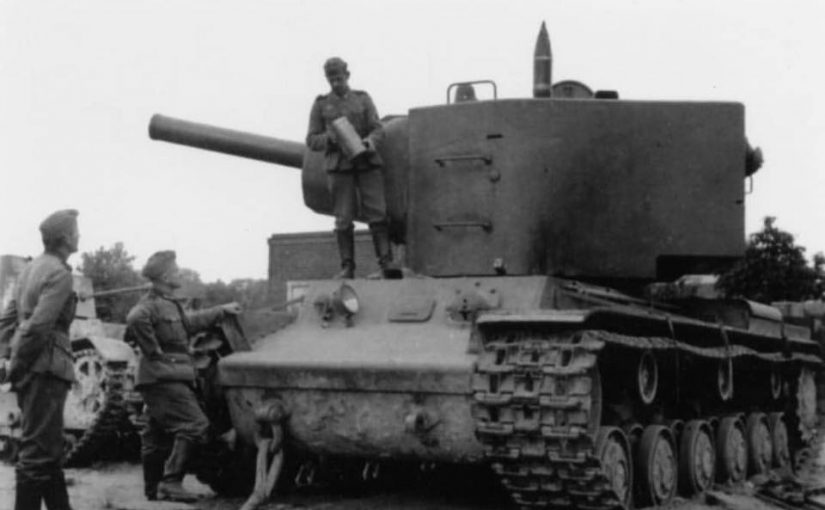
The KV-2 was designed to break through fortifications. It had an enormous turret which carried a gigantic 5.98 inch howitzer. Anti-concrete shells the size of garbage cans were fired from the howitzer. These shells were used to knock down pillboxes and bastions. As a specialized version of the KV-1, the KV-2 played a role similar …
Author Archives: M Malory
JS-2 Heavy Tank
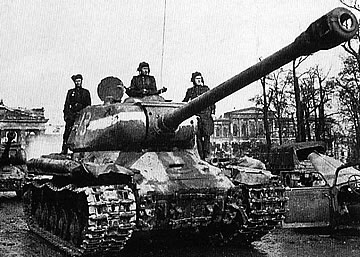
The JS-2 Heavy Tank, which was also known as the Victory Tank, was an upgraded version of the JS-1, with a larger main gun. Production of the JS-2 began at the end of December 1943. By the beginning of 1944, about 100 JS-2s were in service. A 4.8 inch (122mm) main gun was fitted onto …
JS-1 Heavy Tank
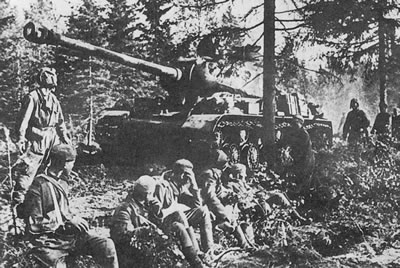
The Germans developed a number of different tanks in response to the Soviet Union’s KV-1 and T-34, and the Soviets, in turn, responded to these German developments by creating the JS (Joseph Stalin)-1 Heavy Tank. Design of the JS -1 commenced in 1941. The Soviets wanted the JS-1 to be a four-man tank that didn’t …
Hotchkiss H-39 Light Tank
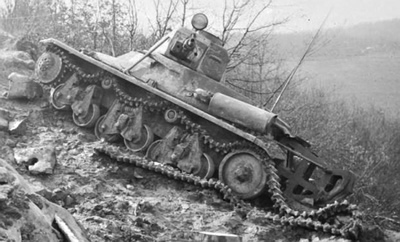
The Hotchkiss H-39 Light Tank was the last tank in the Hotchkiss H series and the only tank in the series with a long-barreled main gun. The H-38, an interim version that was built after the H-35, had a better 120 hp petrol engine than the H-35, but it kept the H-35’s 1.46 inch (37 …
Hotchkiss H-35 Light Tank
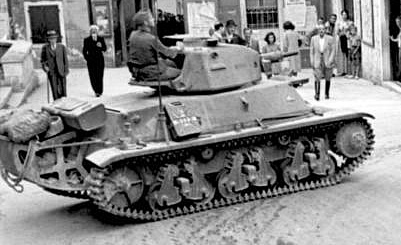
The Hotchkiss H-35 light tank was designed in 1933 and was originally meant to be a light tank for the French cavalry. However, when it entered service in 1936, it was also put into use as an infantry support tank. About 400 Hotchkiss H-35 light tanks were produced. One fourth of these were assigned to …
6 Ton Tank (M1917)
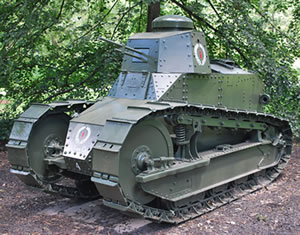
The 6 Ton Tank, officially known as the M1917, was a copy of the French Renault FT-17 tank. Because France and America had different engineering standards, many changes had to be made to the M1917s before they could enter service. In the 6 Ton Tank, the steel-rimmed wooden idler wheels of the FT-17 were replaced …
Ford 3 Ton Tank (Two-Man Tank)
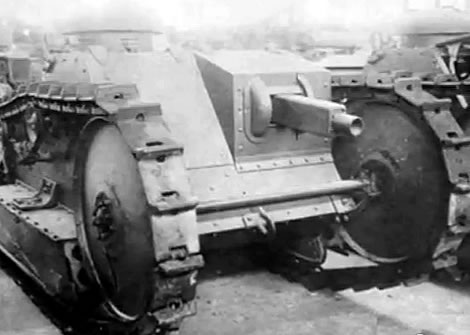
During World War I, American forces in France used either French light tanks or British heavy tanks. In 1918, Ford copied the design of the French Renault FT-17 to create an American two-man tank, the Ford 3 Ton Tank. Although it was called a tank, it was really a machine gun carrier. The Ford 3 …
FCM 36 Infantry Tank
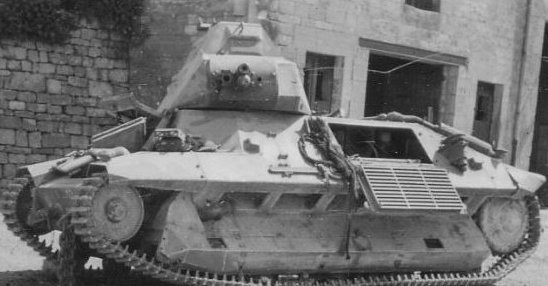
France began building the FCM 36 infantry tank in 1936. It was designed to be a light infantry support tank. The FCM 36 was the first French tank to use a diesel engine. The 8.4 liter Berliet water-cooled engine could reach a maximum speed of 15 miles per hour (24kph) and a had a maximum …
E-100 Super Heavy Tank
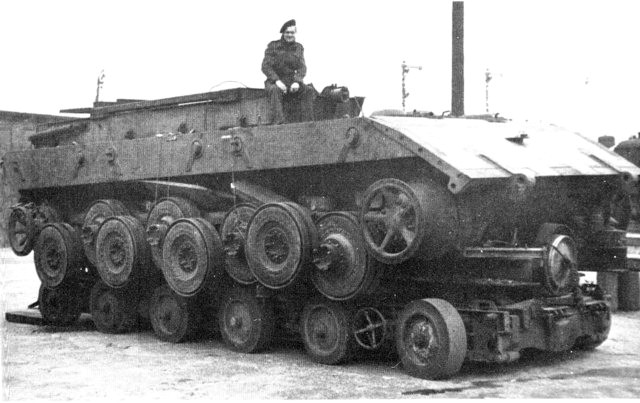
In the middle of 1943, the Germans began developing a new series of tanks called the E-series. The E-100 Super Heavy Tank was the most advanced tank in this series. The Germans used everything they had learned about tank warfare when they began designing the E-series, which included the E-10, the E-25, the E-50 and …
Jagdpanzer IV Tank Destroyer
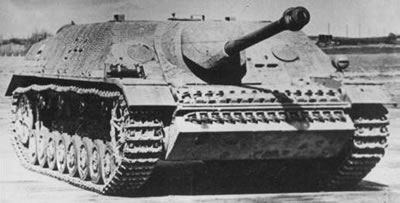
The Jagdpanzer IV, which used the chassis of the PzKpfw IV, replaced the StuG III early in 1944. The earliest model of the Jagdpanzer IV, which was essentially an upgrade of the StuG III, weighed almost 24 tons. It had a 2.95 inch (7.5 cm) PaK39 L/48 gun and carried 79 rounds. Later versions were …
Elefant/Ferdinand Heavy Tank Destroyer
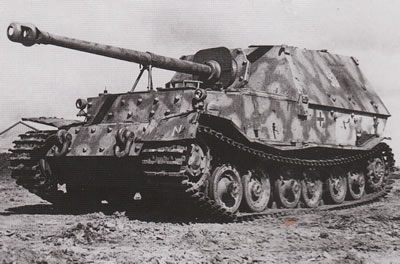
Germany’s Elefant/Ferdinand Heavy Tank Destroyer was an excellent tank when it came to destroying other tanks at long range, but it wasn’t very useful as an assault gun. It hade no defensive capability at close range, and its 34.6 inch (8.8 centimeter) STuK 43/2 L71 gun had limited traverse. The 64-ton Ferdinand, which was named …
Char B1-bis Heavy Tank
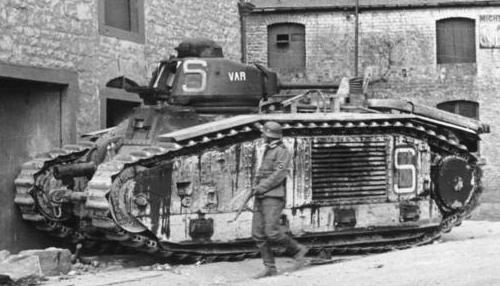
The Char B1-bis Heavy Tank was a newer version of France’s Char B1, with a more powerful engine, thicker armor and a bigger gun. The B1-bis used a Renault aircraft engine and had a 1.85 inch (47mm) instead of a 1.46 inch (37mm) in the turret. Its maximum armor thickness was increased from 1.57 inch …