Tanks in 1918 – The Final Year of World War One – and Beyond

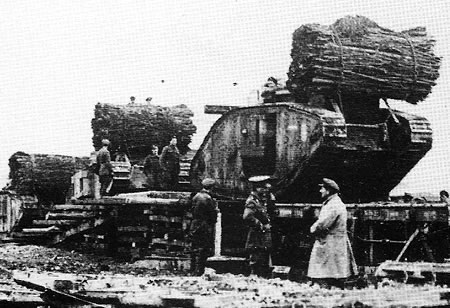
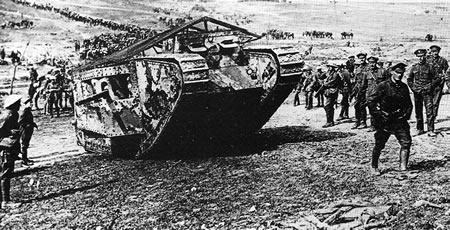
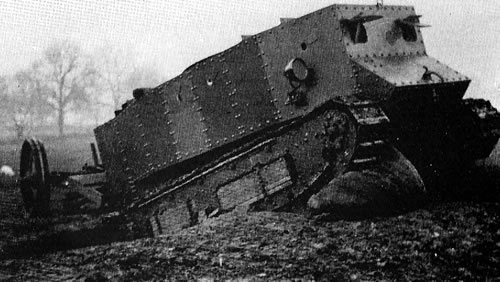
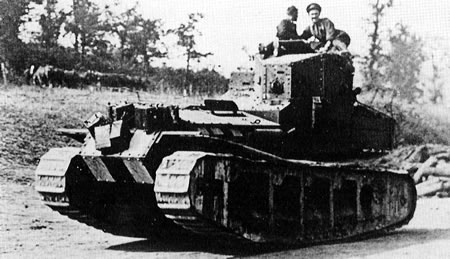
The attack of Cambrai by the British was not success because the heavy tanks were unable to keep up the advance. Therefore, in 1917 the Ministry of Munitions gave the go ahead to create a new tank, the Medium A, to exploit the shortcomings of the heavy tanks. The Medium A tank had a low …

World War One German Tanks and the First Ever Tank Battle

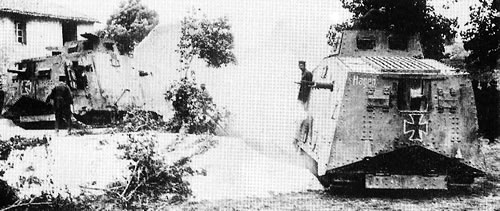
The idea of armored vehicles wasn’t new to the Germans, German and Austrian engineers had in fact tinkered with armoring vehicles before the First World War but they’d had a hard time convincing higher authorities that they were useful. Indeed, it wasn’t until the British attacked with tanks at Flers that the German authorities realized …

World War One French Tanks

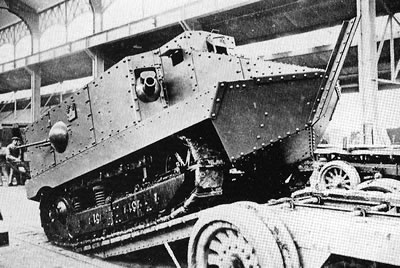
After the invention of the tank in Britain, France was developing her own tank designs totally independently of the British, which meant their versions of the tank were quite a bit different. They began in a similar way to the British, developing tracked farm vehicles, but they also gave wheeled tractors a try as well …

British Tank Development During World War One

While the use of tanks in France and Belgium may not have being a roaring success to begin with, or at least not as big a success as was hoped, they did fare rather better in the less muddy conditions of the Middle-East, fighting the Turkish Army at Gaza in Palestine. The Turkish were eventually …

World War One British Tanks Initially Not Very Successful

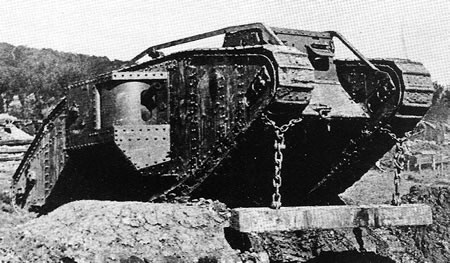
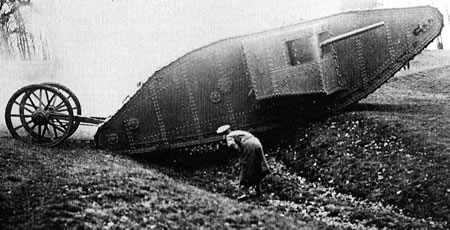
There was an increased interest in these new war machines after their initial successes in the Somme in 1916 and more people came to sign up to drive them. The small tank companies became larger battalions, which all coincided with the government ordering 1000 tanks to be made ASAP. Two more tanks, the Mark II …

First Tanks in Battle

The new Heavy Section tank unit moved to France in August 1916, following the British General Staff’s command that they needed the new vehicles in use as soon as possible because of disastrous losses during the Somme offensive the previous month. A second attack began on September 15th 1916 with C and D Companies’ thirty …

Almost the first tank

After the successful trials of the Killen-Strait the committee decided to test two more American tractors, namely the Bullock ‘Creeping Grip’ machines. First they tried coupling two machines together with an articulated platform, but this proved extremely difficult to maneuver and the coupling often snapped off. After this a bizarre attempt at adding six wooden …

First Tracked Armored Vehicle

After the failure of Pedrail’s Lanship and due to a need for better track units, the Landship Committee turned to America’s tractors and soon began experiments with the small Killen-Strait, which utilized a tri-wheeled arrangement with three individual steel track units with wooden shoes. Lloyd George and Winston Churchill were very impressed with the Killen-Strait …

Landship Committee

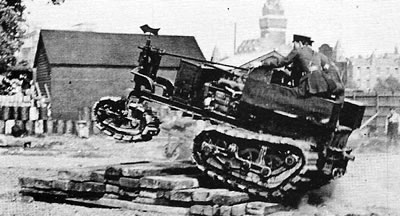
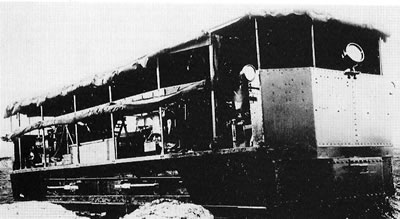
Lieutenant Colonel Ernest Swinton suggested adding armor to an American Holt, a type of artillery tractor, in 1914 but his idea was initially rejected. However, a few months later, in February 1915, the Landship Committee was formed to analyze the possibilities available for manufacturing armored vehicles. The Landship Committee was a collection of clever people …