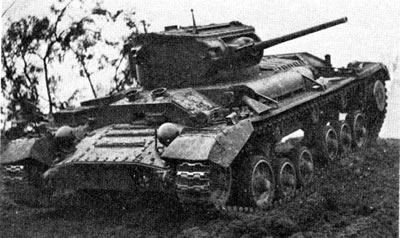
The prototype of the Mark III Valentine Infantry Tank was produced on February 14 – Valentine’s Day – 1940, and Valentines continued to be produced until 1944. During that time, over 8,000 of these tanks were built, some in Canada. There were 11 different Marks and some variants that were used for special purposes. Variants …
Author Archives: M Malory
Mark II and Mark III Light Tanks
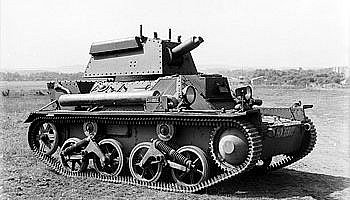
The Mark II and Mark III light tanks belonged to a series of light tanks (Mark I through Mark VI) that were developed by Vickers-Armstrong beginning in the mid-1930s. When the British first began developing medium and light tanks, beginning with the Whippet in World War I, they expected them to be used for breaking …
Mark II Medium Tank
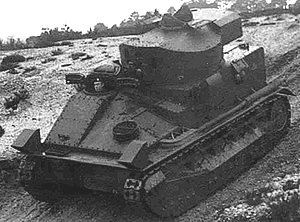
Britain’s Mark II medium tank was two tons heavier than the Mark I medium tank, with a higher superstructure and thicker armor. The driver’s hood on the Mark II was moved from the front to the top of the hull. In the Mark II, the driver’s glacis (front plate) was steeper than on the Mark …
Mark II and Mark III Heavy Tanks
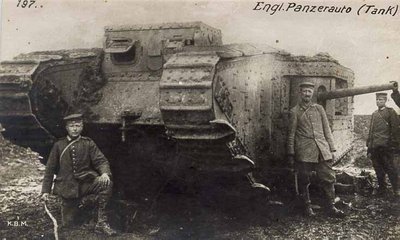
Britain’s 150 Mark I heavy tanks performed so well that Commander in Chief Field Marshal Sir Douglas Haig ordered 1,000 more tanks built. The first 50 of these new tanks were Mark II heavy tanks, half of which were male and half of which were female. Some minor improvements were made to the Mark II, …
Vickers Mark I Medium Tank
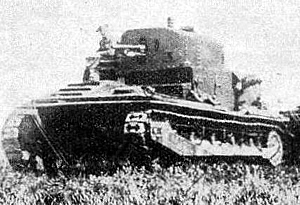
The Mark I Medium Tank was the first British tank to be designed after World War I. Originally known as Light Tank Mark I, this tank was later reclassified as a medium tank. Built by Vickers, the Mark I Medium Tank was the first British tank with a turret that could rotate all the way …
Mark I Heavy Tank (“Big Willie”, “Mother”)
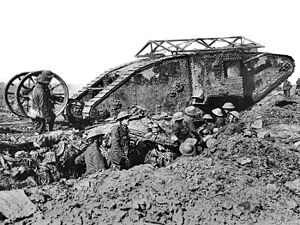
In 1916, Tritton and Wilson, who also designed the Number One Lincoln Machine, or Little Willie, designed a tank that could mount a step that was 4 and a half feet (1.37 meters) high and cross a trench that was 8 and half feet (2.6 meters) wide, as newly required by the British War Office. …
Continue reading “Mark I Heavy Tank (“Big Willie”, “Mother”)”
Medium C Hornet
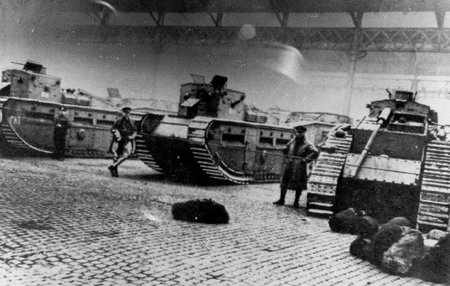
The Medium C Hornet was an improved version of the Medium B Whippet. Like the Medium B, the Medium C had an engine in the rear of the tank. The Medium C Hornet weighed 20 tons (20,320kg) and had a 150hp Ricardo engine. This tank could hold 150 gallons of gasoline, more than twice as …
Medium B Whippet
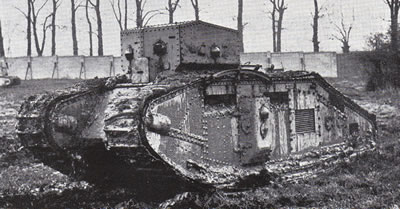
The Medium B Whippet was built in 1918. It was shaped more like a heavy tank than the Medium A Whippet and was longer, wider and heavier than its predecessor. However, it was shorter than the Medium A. A large, fixed turret was mounted on top of the Medium B. This turret was in front …
Medium A Whippet
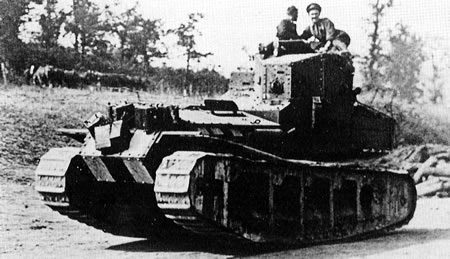
The Medium A, or the Whippet, was the only British medium tank that ever saw action during World War I. It was also known as the Tritton Chaser, because it was designed by Sir William Tritton. The Whippet was produced by William Foster’s factory, which was in Lincoln, England. It was designed in November 1916, …
LK II Light Tank
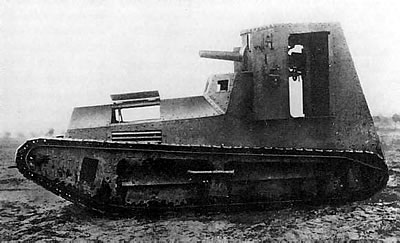
The LK II light tank was Germany’s upgraded version of the LK II. Like the LK I, the LK II only existed as a prototype. The LK II light tank had thicker armor than the LK I. This increased the LK II’s weight by almost two tons. The LK II also had a bigger main …
LK I Light Tank
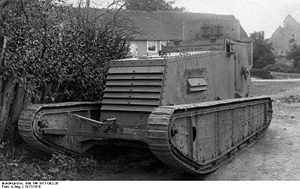
The LK I was a German light tank that was designed to be simple and easy to produce. Its designer was Joseph Vollmer. Vollmer also had a hand in the creation of the A7V Sturmpanzer-Kraftwagen. Designed in 1918, the LK I, or Leichte Kampfwagen I, had a layout like that of a typical car. It …
Number One Lincoln Machine (“Little Willie”)
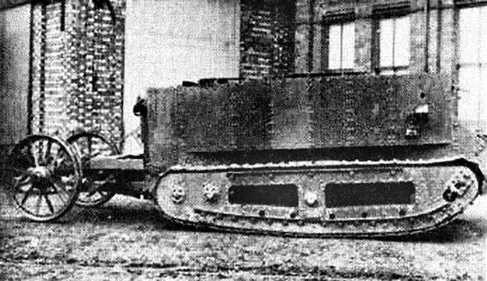
The Number One Lincoln Machine, or “Little Willie”, is sometimes considered the world’s first tank. However, it only existed as a prototype, and was never engaged in battle. Little Willie was sometimes known as the “Tritton Machine”, after one of its two designers: William Tritton, who was chief executive of William Foster and Co. Ltd. …
Continue reading “Number One Lincoln Machine (“Little Willie”)”