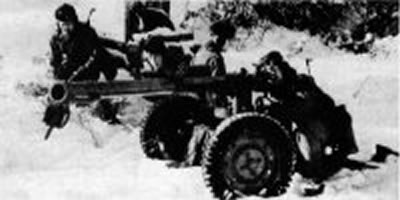
The M59 and M59A RCLs are identical, except that the M59A has fins around the chamber. These fins are supposedly to help cooling, although it is doubtful that the firing rate would ever be so high that overheating would present a problem. The M59 RCL and the M59A RCL gun can each fire 13.2 pound (96kg,) …
Author Archives: M Malory
China – Type 56 Anti-Tank Grenade Launcher
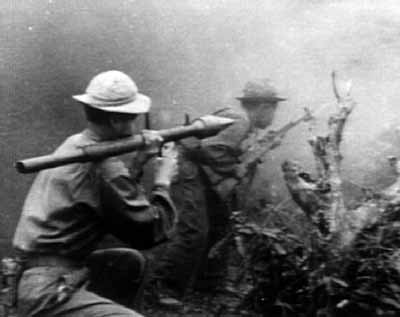
The Type 56 anti-tank grenade launcher is a straightforward copy of the Russian RPG-2. It is almost obsolete, but may be held as war stock for use against lightly armored vehicles. The Type 56 reusable anti-tank grenade launcher is shoulder fired. It can fire either Russian or Chinese Type 50 3.15 inch (80mm) caliber HEAT …
Continue reading “China – Type 56 Anti-Tank Grenade Launcher”
China – Type 51 90mm RCL Rocket Launcher
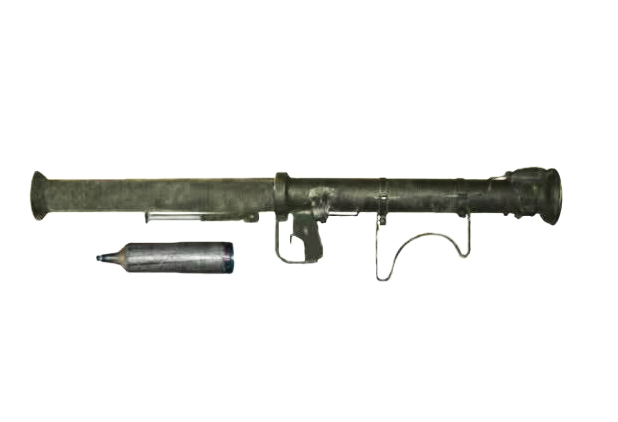
The Chinese Type 51 90mm RCL rocket launcher is a copy of the American M20 3.5 inch (89mm) rocket launcher. The Type 51 RCL fires HEAT projectiles. It has a muzzle velocity of 320ft/s (98m/s), giving the weapon a range up to 1300yards (1200m). It is capable of penetrating 10.5inches (267mm) of armor. A two …
Brazil – M18A1 Recoilless Rifle
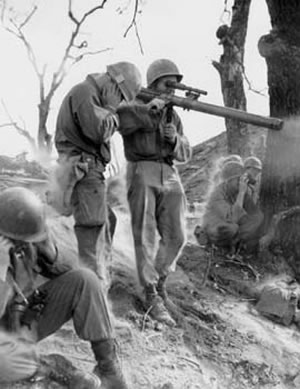
Brazil’s M18A1 recoilless rifle is a copy of the American M18A1, which is no longer used by the American Army. The M18A1 is suited to the South American arena of combat, where it is particularly effective against APCs and lightly armored vehicles. Weighing 55 pounds (25kg) and with a length 62 inches (1.56m), the M18A1 recoilless …
Belgium – RL-83 Blindicide Rocket Launcher and RLC-83 Compact Rocket Launcher
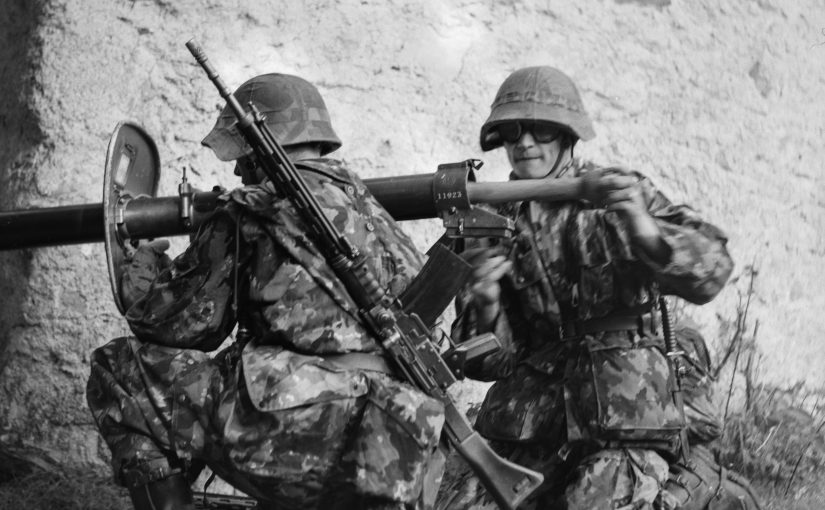
The RL-83 Blindicide is a shoulder-fired rocket launcher that was developed for the Belgian army. Although the Belgian army has declared it obsolete, it is still being used by the armies of other countries – African armies in particular. The 3.26 inch (83mm) caliber RL-83 Blindicide rocket launcher was operated by a crew of two men. …
Continue reading “Belgium – RL-83 Blindicide Rocket Launcher and RLC-83 Compact Rocket Launcher”
Belgium – MECAR 90mm Light Gun
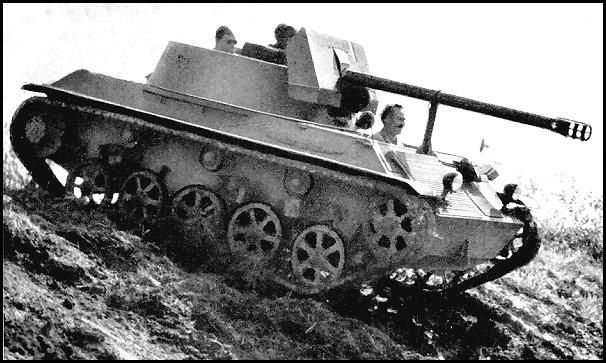
The Belgian Army mostly uses the MECAR 90mm light gun as an anti-tank weapon. However, this gun is also used to fire other types of ammunition, such as smoke and fragmentation rounds. As an anti-tank gun The MECAR 90mm light gun fires a 7.8 lb (3.54kg), 3.54 inch (90mm) HEAT round. The maximum range is …
Austria – M40A1 and M40A2 Recoilless Rifles
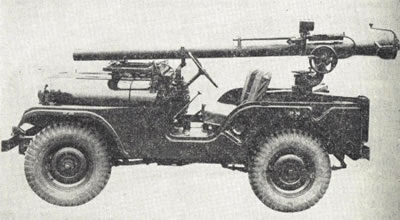
The M40A1, which is an American design, is currently being used by the Austrian army. There are two versions of the M40A1 recoilless rifle. One is mounted on a vehicle with a special mounting that gives it a full 360 degree firing circle. The other version is towed. The M40A1 is said to fire at …
Continue reading “Austria – M40A1 and M40A2 Recoilless Rifles”
World War I – Battle of Rosières
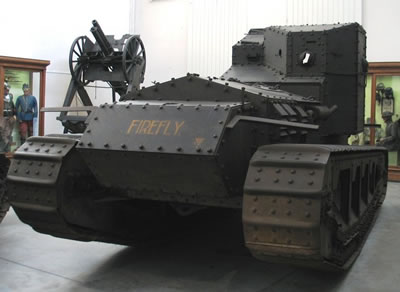
Britain’s Medium A Whippet tank was used for the first time at the Battle of Rosières, which took place from March 26 to March 27, 1918, during World War I. The Battle of Rosières was part of Operation Michael, a German campaign to break through Allied lines, destroy French forces and drive British forces on …
World War I – Battle of St. Quentin
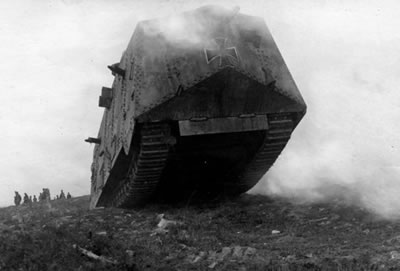
German tanks were used for the the first time during the Battle of St. Quentin, the first battle to take place during Germany’s Operation Michael, a campaign to push past Allied lines, destroy French forces and drive British forces off of the continent of Europe. Operation Michael was the first phase of Germany’s Spring Offensive, …
World War I – Battle of Cambrai
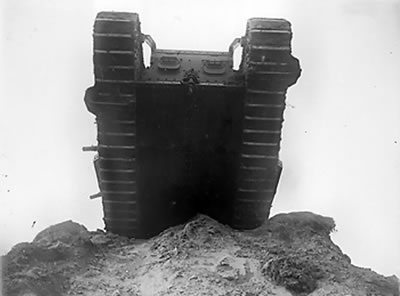
The Battle of Cambrai was the first battle in which tanks were deployed en masse in a significant strategic role. In June 1917, Major-General Sir John Capper, administrative commander of the British Tank Corps, and Major John Frederick Charles Fuller began planning a tank attack between St Quentin and Cambrai, in northern France. However, this …
World War I – Third Battle of Ypres
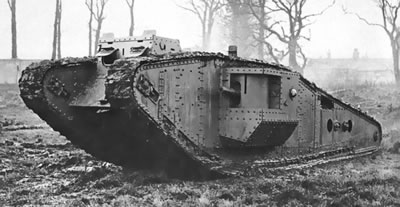
The Third Battle of Ypres, also known as the Battle of Passchendaele, lasted from July 31 to November 6, 1917. The Third Battle of Ypres is famous for being one of the bloodiest battles of World War I, with hundreds of thousands of soldiers on both sides being injured or killed. British, French, Canadian, Australian, …
World War I – Battle of Arras
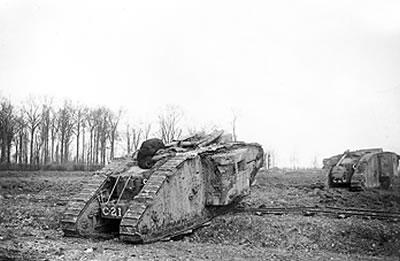
The second time that tanks were used in a large-scale military action was at the Battle of Arras, which started on April 9, 1917 and ended on May 16, 1917. British, Canadian, Newfoundland, Australian and New Zealand troops attacked German soldiers at Arras in France. During the Battle of Arras, the Allies tried to use tanks and …