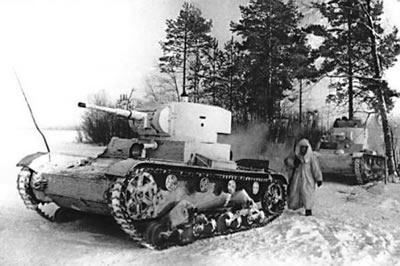
The design of the Soviet Union’s T-26 light tank was based on that of Britain’s Vickers 6 Ton tank. Although the British rejected the Vickers 6 Ton Tank, the T-26 was extremely successful. The T-26 light tank was used during the Spanish Civil War and in the Winter War against Finland. In World War II, …
Author Archives: M Malory
Soviet Union – B-11 107mm RCL Gun
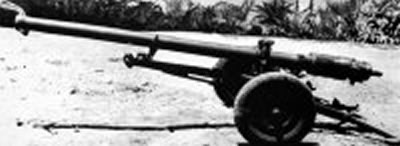
The B-11 107mm RCL gun was a recoilless gun that was developed by the Soviet Union in the 1950s. Although it is considered obsolete, some countries may still be using it today. The B-11 recoilless gun fires HE and HEAT rounds that weigh 19.84 pounds (9kg) and 30 pounds (13.6kg) respectively. . Ammunition for the …
Soviet Union – SPG-9 RCL 73mm Gun
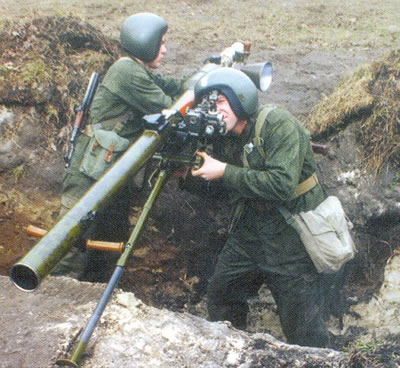
The SPG-9 RCL 73mm gun is a recoilless gun that fires fin-stabilized HEAT rounds. It entered service in the Soviet Union in the 1960s. Four men are needed to operate the SPG-9. The SPG-9 RCL 73mm gun is mounted on a tripod. The tripod weighs 26.45 pounds (12kg), while the launcher weights 104.72 pounds …
T-27 Tankette
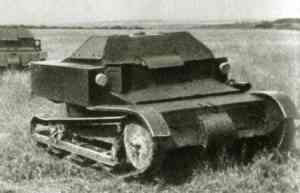
The Soviet Union’s T-27 tankette was a two-man machine gun carrier based on the British Carden-Loyd Mark VI. Its weapons mount was modified to carry a 7.62mm DT machine gun. The T-27 had a larger hull than the Carden-Loyd Mark VI. Its running gear was also different. Soviet engineer N. Kozyrev designed the T-27 tankette. …
Carden-Loyd Mark VI Tankette
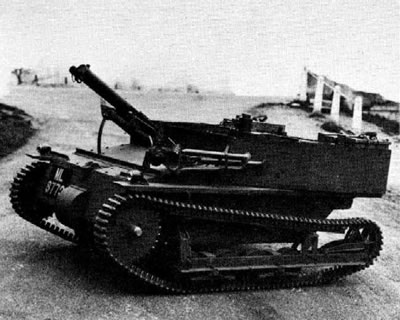
The Carden-Loyd Mark VI tankette was a small two-man machine gun carrier. It weighed less than two tons, and was designed primarily to be used for reconnaissance. Variants included a mortar carrier and a smoke projector. The machine gun, either a 0.303 inch or a 0.500 inch Vickers, was placed on a tripod at the …
Pakistan – 106mm RCL
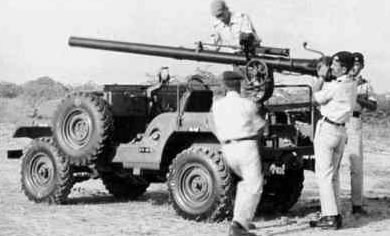
The 106mm RCL (recoilless anti-tank gun) is a Pakistani version of the American M40A1 RCL. In addition to an M40A1 barrel, it has an M86 spotted rifle and an M79 mount. An M92F elbow telescope is mounted on an M90 telescope mount. The 106mm RCL also has an M42 instrument light. Usually, the 106mm RCL is towed …
Japan – KAM-9
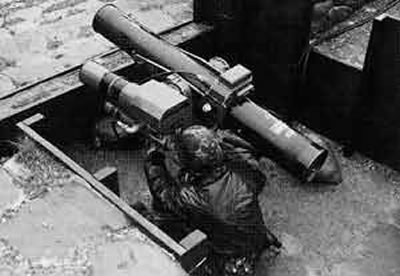
The KAM-9, also known as the Type 79 Jyu-MAT, is a SACLOS guided anti-tank missile that was developed in Japan for use by the Japanese Ground Self-Defense Force. The KAM-9 missile is preloaded in a launch tube that is mounted on a tripod with an optical site. The operator uses commands that are transmitted along a …
Israel – MAPATS
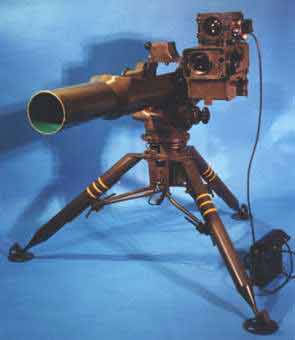
Israel’s MAPATS (Man-Portable Anti-Tank System) is a powerful anti-tank missile system that uses a laser beam riding system for guidance. The MAPATS missile is preloaded in a glass fiber launching tube. A laser beam, which is controlled by the operator, then guides the MAPATS missile to its target. As long as the operator can see …
World War II – Siege of Tobruk
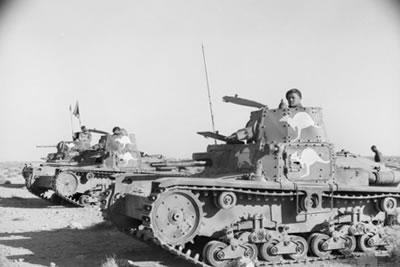
During the Siege of Tobruk, which lasted from February to November 1941, during World War II, German and Italian troops, led by General Erwin Rommel, gained control of the city of Tobruk in Libya. The successes of Axis forces during the Siege of Tobruk were largely due to Rommel’s ability to launch effective defenses against …
Germany – Panzerfaust 3 Anti-Tank System
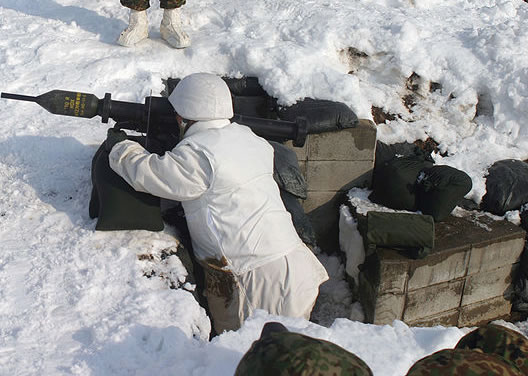
The Panzerfaust 3 anti-tank system was developed in West Germany between 1978 and 1985. It is still being used by the German army. Like the Armbrust, the Panzerfaust 3 anti-tank system is a recoilless weapon that uses the countermass principle. It can be fired from confined spaces, making it ideal for urban combat. The Panzerfaust …
Germany – Cobra and Mamba Missiles
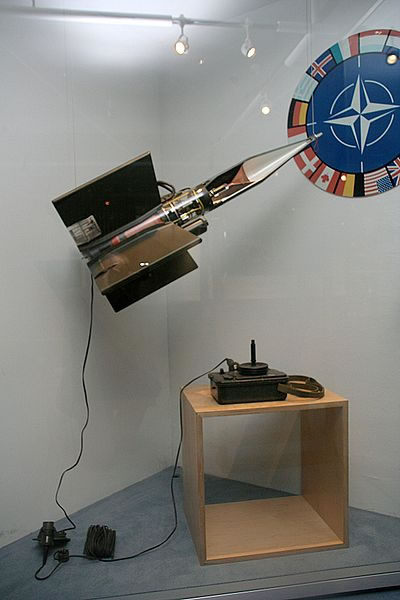
The Cobra missile and the Mamba missile were both developed in West Germany. They are very similar to one another in design and capability. Neither the Cobra nor the Mamba missiles require a launch rail. Once the command cable is connected to the control box, the missile can be fired from a clearing on the ground. Both missiles are operated by …
Germany – Armbrust Light Anti-Tank Launcher
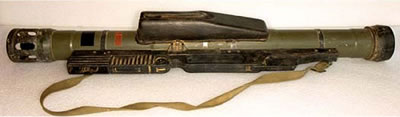
Germany’s Armbrust light anti-tank launcher was developed by a private company. After it proved to be accurate and dependable in trials, it was employed by the West German army. It was used by the German army after the reunification of Germany in 1990, and is still in use today. Shoulder-fired and disposable, the Armbrust (German for …
Continue reading “Germany – Armbrust Light Anti-Tank Launcher”