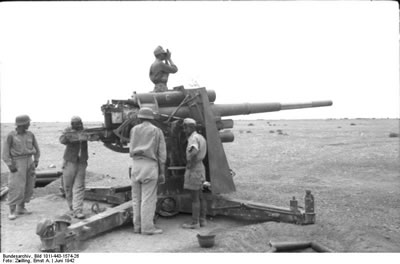
Krupps 88 was the common name for Germany’s series of 8.8 centimeter anti-aircraft guns which were officially called Flak 18, Flak 36 and Flak 37. Flak 18 entered production in 1933. Its 88mm explosive round had a muzzle velocity of 2700ft/s (820m/s) and a weight of 20.3lb (9.24kg). Krupps 88 guns were designed to be …
Author Archives: M Malory
PzKpfw IV Medium Tank
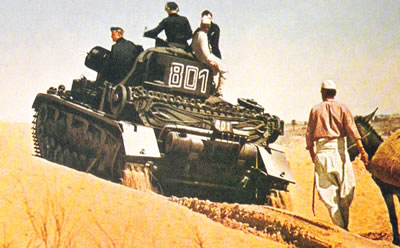
The PzKpfw or Panzer IV was the only German World War II battle tank that was produced until the end of the war. Together, the PzKpfw III and the PzKpfw IV provided most of the military might of Germany’s Panzerwaffe (armored force). A larger turret ring on the PzKpfw IV allowed it to carry bigger …
PzKpfw III Medium Tank
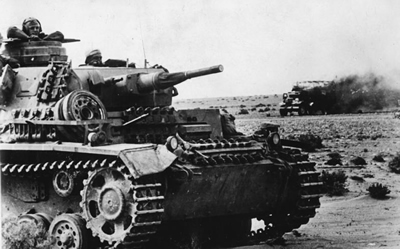
During World War II, most of Germany’s tank strength came from its medium tanks. The PzKpfw Panzer III medium tank was Germany’s main battle tank during the war. Development of the PzKpfw III began in 1935. Twelve standard versions were built: Ausf A through Ausf N. (There was no Ausf I or Ausf K.) PzKpfw …
PzKpfw II Light Tank
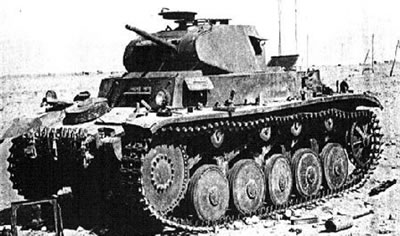
Germany’s PzKpfw Panzer II Light Tank weighed almost 10 tons. It had a 0.79 inch (2cm) cannon, which could fire armor piercing ammunition as well as high explosives, as well as a coaxial MG34 machine gun. It carried three crewmembers. Production of the PzKpfw II began in 1935. Different versions of the PzKpfw II were …
PzKpfw I Light Tank
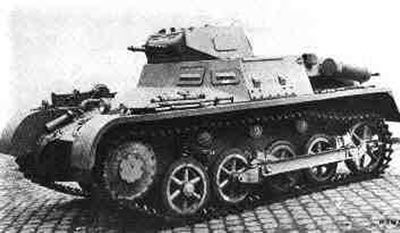
The Treaty of Versailles, which was signed at the end of World War I, stated that Germany was not allowed to build tanks. The Nazis were able to get around this restriction by building an armored vehicle that didn’t have a turret or weapon system. It was called the PzKpfw I Ohne Aufbau (Ohne Aufbau …
PzKpfw Maus Super Heavy Tank
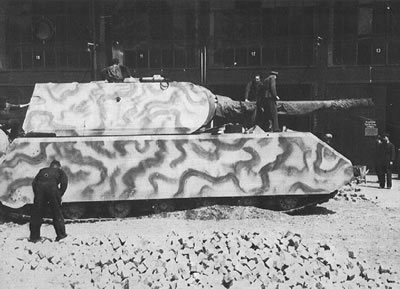
Despite the successes of smaller German tanks, as World War II progressed, Hitler wanted the Nazis to keep building bigger and bigger tanks. Consequently, the Nazis designed a series of super heavy tanks. Only two of these were ever built, the E-100 and the PzKpfw Maus (Mouse), and these two only existed as prototypes – …
Germany – Stielgranate 42
The Stielgranate 42 was a hollow, finned projectile that was developed by the Germans in 1942, when shortages of tungsten made it hard for the Germans to produce AP40 ammunition for the Pak 35/36 Rheinmetall anti-tank gun. Germany allocated all available tungsten for machine tool production. The introduction of the Stielgranate 42 enabled the Germans …
Germany – AP40 Armor-Piercing Ammunition
By the beginning of World War 2, the thickness of armor on tanks had increased significantly. So much so that the majority of previous Anti Tank Weapons were now ineffective. The Germans were quick to develop the AP40 series of rounds – a tungsten carbide core, wrapped in light alloy. The lighter round achieved higher …
Germany – Panzerschnellmine and Holzmine 42
Germany’s Panzerschnellmine and Holzmine 42 mines were similar to the Tellermine. However, the Panzerschnellmine and the Holzmine 42 had wood enclosures and therefore cost less to manufacture than the Tellermine, which was enclosed in steel. Wood enclosures also made it harder for metal detectors to find the Holzmine 42 and the Tellermine. The Panzerschnellmine was made up of a wooden …
Continue reading “Germany – Panzerschnellmine and Holzmine 42”
Germany – Tellermine 29 And Tellermine 35
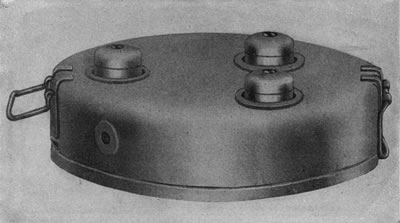
The Tellermine 29 and the Tellermine 35 were the first anti-tank mines. The Tellermine 29, the first anti-tank mine, was developed by the Germans in 1931. Anti-tank mines that are in service today bear similarities to the Tellermine 29. The Tellermine 29 had about 13lb (6kg) of TNT, which was held in an 18inch (454mm) disk-shaped container …
Continue reading “Germany – Tellermine 29 And Tellermine 35”
Neubaufahrzeuge V and VI
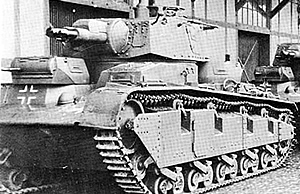
The Nazis were building tanks at a rapid pace in the interwar period. At first, they focused on building light and medium tanks. Then, between 1925 and 1933, the German companies Krupp, Rheinmetall-Borsig and Daimler-Benz built prototypes of a heavy tank, which weighed between 15 1/2 and 18 tons. The Nazis called it the Grosstraktor …
M1931 Christie
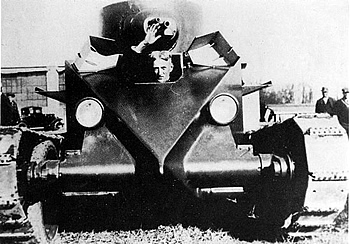
The M1931 Christie tank was designed by J. Walter Christie, an American engineer who created some innovative tank designs. Christie invented the Christie suspension system, which allowed tanks to have a low center of gravity and a low silhouette and gave them the ability to move at high speeds. The Christie suspension system utilized a …